

Best Healthy Meal Delivery Services in Toronto (2026 Guide)
Table of Contents
- A Quick Comparison of Healthy Meal Delivery Options
- How Healthy Meal Delivery Services Work
- Meal Delivery Services for Weight Loss
- How to Choose a Meal Delivery Service
- Healthy Meal Delivery Subscription Cost Explained
- What to Ignore in Healthy Meal Delivery Marketing
- Frequently Asked Questions
Last Updated: September 16, 2026
A Quick Comparison of Healthy Meal Delivery Options
Searching for the best healthy meal delivery services in Toronto means sorting through a crowded field. Alijandro's Kitchen has built its meal prep service around a simple idea: chef-prepared food that fits real dietary needs, delivered to your door. The city's options break down into a few broad categories, and knowing which one matches your routine matters more than any marketing claim.
| Service Type | Best For | Typical Commitment | Dietary Flexibility |
|---|---|---|---|
| Local chef-prepared meal prep | Busy professionals wanting fresh, restaurant-quality food | Weekly, often pausable | High, with direct kitchen communication |
| National subscription boxes | Budget-focused buyers | Locked weekly or biweekly | Moderate, set menu categories |
| Grocery-style meal kits | People who enjoy cooking | Weekly | High, you control preparation |
| Weight-loss programs | Structured calorie targets | Multi-week | Lower, fixed portions |
Who Each Type of Service Suits Best
Local chef-prepared services suit anyone who wants ready-to-eat meals without sacrificing culinary quality. National subscription boxes work if price outweighs freshness. Meal kits fit households that enjoy cooking but want portion control handled. Weight-loss programs appeal to people who want a rigid structure and nothing else.
The distinction matters because most complaints about meal delivery trace back to a mismatch, not a bad service.
How Healthy Meal Delivery Services Work
Healthy meal delivery services are companies that prepare, portion and deliver ready-to-eat or no-prep meals on a recurring schedule. You choose a plan, select meals from a weekly menu, and receive refrigerated or frozen containers at your doorstep.
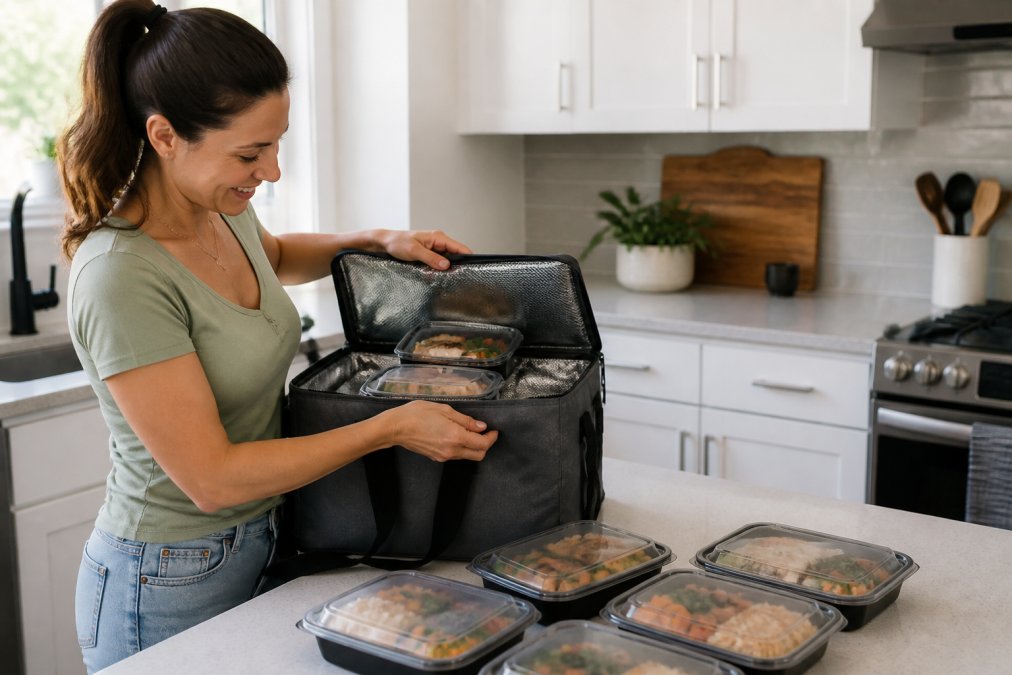
Weekly Menus, Order Cut-Offs, and Doorstep Delivery
The operational rhythm is where services differ most. Most publish a weekly menu several days ahead, set an order cut-off, then cook and deliver within a defined window. Miss the cut-off and you either get the default menu or skip that week entirely.
A common mistake is choosing a service before checking its cut-off policy. If you travel for work, a plan without pause flexibility becomes wasted food and wasted money. Ask two questions before signing up: can I pause, and how much notice do you need?
Food safety matters here too. Refrigerated delivery depends on cold-chain discipline, and Health Canada's food safety guidance for consumers outlines how long prepared food can safely be stored once it arrives. Treat the delivery window as the start of that clock, not a suggestion.
Meal Delivery Services for Weight Loss
Weight-loss meal delivery works by removing portion decisions from your day. Instead of estimating servings, you receive pre-portioned meals with controlled calories and protein. That sounds simple, but the category splits into three structurally different models, and the one you pick determines whether you stay on it.
Fixed-calorie plans assign every meal a set calorie target, commonly in the 350-500 kcal range for lunch and dinner, and rotate a menu inside that band. You get consistency and zero math. The trade-off is that the plan cannot adapt if your training load or appetite changes week to week.
Macro-balanced plans hold calories roughly steady but let you shift the protein-to-carbohydrate ratio. This is the model that suits anyone lifting, training for an event, or managing blood sugar, because protein targets matter more than raw calories for satiety and lean-mass retention. Ask whether the service publishes per-meal macros on the label or only on the website, the label is what you actually eat.
Portion-controlled plans keep the food familiar and shrink the serving rather than reformulating the recipe. These tend to be the easiest to sustain and the least precise for anyone chasing a specific macro number.
What Actually Determines Whether a Plan Works
The mechanism is adherence, not the plan design. A calorie deficit you abandon after two weeks does nothing, and the single biggest predictor of adherence in this category is whether the food tastes good enough to eat repeatedly. Culinary quality is not a luxury feature here, it is the mechanism that keeps you on the plan. The second predictor is menu rotation: a four-week cycle you can see in advance beats a surprise menu, because you can plan around the meals you dislike.
Macro-Tracking and App Integration
Most services now publish macros, but far fewer let you export them. If you log food in a fitness app, check whether the service provides a downloadable nutrition file or a barcode/QR on the container. A common pattern is that national subscription boxes publish macros on the website but not on the packaging, which forces manual entry every meal.
Allergy and Dietary Safety in Weight-Loss Plans
- Does the kitchen run dedicated prep areas for the top allergens (peanut, tree nut, wheat, dairy, egg, soy, shellfish, sesame)?
- How is equipment cleaned between allergen and non-allergen batches?
- How does the service notify you when an ingredient changes mid-subscription?
The Cost Question Specific to Weight Loss
Weight-loss plans are usually priced per meal like any other service, but the effective cost is higher because you are buying fewer meals per day than a full meal-prep subscription.
How to Choose a Meal Delivery Service
Choosing a meal delivery service comes down to four variables: dietary fit, delivery frequency, freshness model and flexibility.
Dietary Restrictions and Allergy Safety Protocols
If you have a diagnosed allergy, treat the first order as a test. Order one week, read the labels, and confirm the food matches what was promised before committing to a subscription.
Healthy Meal Delivery Subscription Cost Explained
Healthy meal delivery subscription cost depends on meal count, portion size, protein choices and delivery frequency.
The Advertised Price vs. the Real Price
- Base per-meal price at the plan size you would actually order, not the largest one.
- Delivery fee, which some services fold in and others add per box. Per-box fees punish small orders; folded-in fees punish large ones.
- Minimum order thresholds that force a larger commitment than you wanted.
- Skip and pause fees for changes made after the cut-off.
- Packaging deposits or container returns, where applicable.
- Taxes, which apply to the full order including delivery in most cases.
How Cost Compares Across Service Types
Using the four categories from the comparison table above:
- Local chef-prepared meal prep sits in the middle-to-upper range per meal but usually includes delivery on larger orders and offers the most flexibility to pause. The effective cost is often lower than it looks because waste is minimal.
- National subscription boxes advertise the lowest per-meal prices, but the real cost climbs once you add delivery, account for the locked weekly commitment, and factor in meals you skip or forget to customize.
- Grocery-style meal kits look cheap per serving but require you to supply oil, salt, and pantry staples, and the per-serving price assumes you cook every kit that week.
- Weight-loss programs are priced per meal like the rest, but the effective cost per day is higher because you are buying fewer meals per day than a full meal-prep subscription.
Cancellation, Pause, and Commitment Terms
- The minimum commitment, if any (some plans lock you in for 4, 8, or 12 weeks).
- The notice period required to cancel or pause, 48 hours, 5 days, and 7 days are all common.
- Whether skipping a week counts against a minimum order requirement.
- Whether there is a cancellation fee or a forfeited deposit.
- Whether promotional pricing reverts to a higher rate after the first billing cycle, and at what rate.
A Simple Way to Compare
What to Ignore in Healthy Meal Delivery Marketing
Ignore any claim that a single service is universally healthiest.
Frequently Asked Questions
What is the best healthy food delivery service in Toronto?
The best healthy meal delivery service in Toronto depends on your priorities: dietary needs, weekly budget, delivery frequency, and whether you want ready-to-eat or meal prep. Look for a provider that is transparent about ingredients, allergy handling, and subscription management. Alijandro's Kitchen offers meal prep and catering across the Greater Toronto Area, and its website lists current menus and pricing so you can compare before committing.
How much does a healthy meal delivery subscription cost per week?
Healthy meal delivery subscription cost in the GTA varies based on the number of meals per week, portion size, and whether you choose premium proteins or organic produce. Most services price per meal, so a five-meal plan costs less per meal than a three-meal plan. Alijandro's Kitchen does not publish fixed prices online because pricing depends on quantity, dates, and delivery; request a quote for an exact weekly figure.
Are there meal delivery services that cater to specific dietary restrictions?
Yes. Many Toronto-area providers offer gluten-free, keto-friendly, paleo, vegan, and low-carb options. The key is to ask how they prevent cross-contact in the kitchen. A reliable service will explain its allergy safety protocols, such as separate prep areas and labeled containers, and will confirm in writing that your meals meet your restrictions. Alijandro's Kitchen accommodates dietary needs for meal prep and catering; discuss your requirements when ordering.
What is the difference between meal kits and prepared meal delivery?
Meal kits ship raw ingredients and recipes, so you still cook. Prepared meal delivery sends ready-to-eat or microwaveable meals that require no prep. For busy professionals, prepared meals save more time. Meal prep services sit in between: they cook and portion meals for the week, often with a rotating weekly menu. Alijandro's Kitchen focuses on chef-prepared meal prep and catering, not raw meal kits.