

Private Chef Catering: What to Expect
Table of Contents
- What Private Chef Catering Actually Involves
- Private Chef vs. Personal Chef: Understanding the Difference
- Questions to Ask a Private Chef Before You Book
- Private Chef Menu Planning and Customization
- Private Chef Event Setup and Cleanup Expectations
- Private Chef for a Small Wedding: What Changes
- Dietary Needs, Allergies, and Food Safety
- Pricing, Hidden Fees, and Cost Factors
- Frequently Asked Questions
Last Updated: October 5, 2026
What Private Chef Catering Actually Involves
Private chef catering is more than just hiring someone to cook at your event. It's a full-service culinary experience where a trained professional arrives at your location, uses your kitchen or brings portable equipment, and prepares restaurant-quality meals on-site while you host your guests.
The chef handles everything: menu design, ingredient sourcing, food prep, cooking, plating, and often cleanup. You get fresh, customized food tailored to your guest count and dietary needs.
Private chef catering transforms how guests experience an event. The difference is immediate. Your guests taste food prepared minutes before service, not hours earlier.
Here's what typically happens on event day:
- Chef arrives 2-4 hours before your first course
- Sets up mise en place (prepped ingredients) in your kitchen
- Coordinates timing with you on final details
- Cooks courses to order while guests enjoy cocktails or appetizers
- Plates and serves each course professionally
- Manages kitchen cleanup at the end
The appeal is clear: restaurant-quality dining without the restaurant experience. Your guests eat in your home or chosen venue, with personalized service and food designed specifically for them.
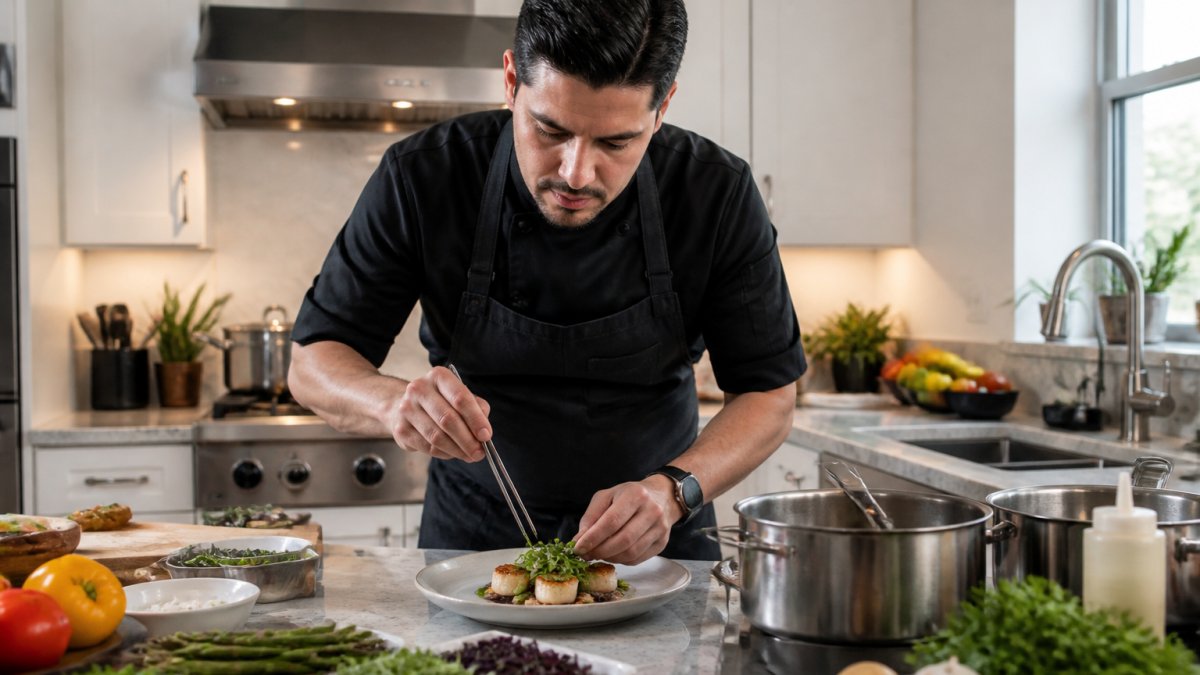
Private Chef vs. Personal Chef: Understanding the Difference
These terms get used interchangeably, but they describe different services. Understanding the distinction helps you book the right professional for what you actually need.
A personal chef typically works on an ongoing basis. Personal chefs are ideal for busy families, people with strict dietary needs, or anyone who wants restaurant-quality meals without the cooking.
A private chef is event-focused. They prepare one-time or occasional meals for specific occasions: dinner parties, small weddings, corporate events, or intimate celebrations. Private chef catering means they arrive, cook live, serve, and leave. You're paying for the experience and the occasion, not an ongoing relationship.
The pricing models differ too. Personal chefs usually charge a flat weekly or monthly fee. Private chef catering charges per event, often based on guest count, menu complexity, and service style.
For film and TV production crews, private chef catering is the relevant service. You need meals prepared for a specific shoot day or wrap party, not ongoing meal prep.
Questions to Ask a Private Chef Before You Book
Vetting a chef properly prevents disappointment. These questions separate professionals from amateurs.
About their experience:
- How many private events have you catered in the past year?
- What's the largest guest count you've handled?
- Have you worked with dietary restrictions or allergies before?
- Can you provide references from past clients?
About the menu and customization:
- Do you create custom menus or offer preset options?
- How far in advance do you need the final guest count and menu decisions?
- Can you accommodate last-minute changes to the menu?
- What's your approach to dietary restrictions and cross-contact prevention?
About logistics and kitchen access:
- What equipment do you need access to in the kitchen?
- Do you bring your own cooking equipment if needed?
- How much setup time do you require before guests arrive?
- Will you handle cleanup, or is that separate?
About pricing and contracts:
- What's included in your per-person rate?
- Are there additional fees (travel, equipment rental, service staff)?
- What's your cancellation policy?
- Do you require a deposit, and when is final payment due?
About service style:
- Will you serve family-style, plated individually, or buffet?
- Do you provide staff for service, or do you handle it solo?
- How will you time courses to match our event flow?
Asking these questions upfront clarifies expectations and reduces the chance of mismatches on event day.
Private Chef Menu Planning and Customization
Menu planning is where private chef catering shines. Unlike fixed catering menus, you work with the chef to design something specific to your guests and occasion.
Most chefs start by understanding your vision. They ask about your event's tone, your guests' preferences, any dietary restrictions, and your budget. They then propose a menu that fits those parameters.
The customization process typically includes:
- Cuisine style: Italian, French, contemporary North American, fusion, or something else entirely
- Course structure: How many courses do you want? Appetizers, soup, salad, main, dessert?
- Ingredient preferences: Local sourcing? Seasonal? Specific proteins or vegetables to feature or avoid?
- Plating and presentation: Family-style comfort or individual plated elegance?
- Wine or beverage pairing: Some chefs coordinate drinks with each course
A good chef listens more than they pitch. They understand that the menu should reflect your event, not their ego.
Timing matters too. Most chefs need the final menu and guest count at least 1-2 weeks in advance. This gives them time to source ingredients and plan prep work. Last-minute changes are possible but often cost more.
Private Chef Event Setup and Cleanup Expectations
Understanding what happens before, during, and after service prevents friction on event day.
Before guests arrive:
The chef typically arrives 2-4 hours before your first course. They assess your kitchen, organize their equipment, and begin prep work. Mise en place is critical, all ingredients are prepped, measured, and arranged so cooking flows smoothly.
You should provide:
- Clear access to your kitchen
- Space to store their equipment and ingredients
- A designated area for dirty dishes
- Any special equipment they've requested (extra burners, warming trays, etc.)
During service:
The chef coordinates timing with you. They manage the kitchen while you focus on your guests.
Most chefs work solo or with one assistant. They plate dishes, manage plating timing, and sometimes plate at table for a more theatrical experience.
After service:
Cleanup expectations vary by contract. Some chefs include basic cleanup (washing dishes, wiping surfaces, taking out trash). Others leave that to you. Clarify this before booking, it's a common source of misunderstanding.
Most chefs leave within 30-60 minutes of the final course, assuming cleanup is included.
Private Chef for a Small Wedding: What Changes
Small weddings, typically 20-40 guests, are ideal for private chef catering. The scale is manageable, the intimacy works in your favor, and the experience feels personal in a way large catering can't match.
What changes with a wedding versus a dinner party:
Menu complexity increases. Weddings often feature multiple courses, special presentations, and more refined plating. The chef may prepare amuse-bouches, a welcome cocktail course, soup, salad, main, and dessert. Each course requires precise timing.
Guest expectations are higher. Wedding guests scrutinize food more closely. The chef needs to execute flawlessly, with no room for mediocre dishes or sloppy plating.
Dietary needs multiply. With 30+ guests, you'll almost certainly have vegetarians, vegans, gluten-free diners, and people with allergies. The chef must prepare parallel dishes without cross-contact.
Service style matters more. Weddings typically call for plated service or elegant family-style presentations, not casual buffets. The chef coordinates timing so all guests eat together.
Backup plans are essential. Weather, equipment failures, or unexpected changes can derail a wedding. A professional chef has contingencies and adapts without panic.
For small weddings, private chef catering often costs less than traditional full-service catering while delivering superior food quality and customization.
Dietary Needs, Allergies, and Food Safety
This is non-negotiable. Food allergies and cross-contact are serious. A professional private chef takes them seriously.
Before booking, be explicit about every dietary restriction and allergy. Don't assume the chef will remember or manage it perfectly, document everything.
What a responsible chef does:
- Asks detailed questions about each dietary need (vegetarian, vegan, gluten-free, nut-free, shellfish allergy, etc.)
- Confirms ingredients in advance, no surprises on event day
- Uses separate cutting boards, utensils, and cookware for allergen-free meals
- Verifies with you 48 hours before the event that nothing has changed
- Clearly labels plated dishes so guests know what they're eating
What you should verify:
- Does the chef have experience with the specific allergies your guests have?
- How do they prevent cross-contact in the kitchen?
- Will they source pre-packaged ingredient labels to verify allergen information?
- Do they understand the difference between vegetarian and vegan, or gluten-free and celiac?
According to Health Canada's guidelines on food allergies and labeling, the "Big 9" allergens (peanuts, tree nuts, milk, eggs, fish, shellfish, soy, wheat, sesame) account for most food-related reactions. A professional chef knows these and asks about them explicitly.
Pricing, Hidden Fees, and Cost Factors
Private chef catering pricing varies widely based on several factors. Understanding what drives cost helps you budget and avoid surprises.
What affects pricing:
- Guest count: Most chefs charge per person. Larger groups usually get a lower per-person rate.
- Menu complexity: A simple three-course meal costs less than an elaborate five-course tasting menu.
- Ingredient quality: Premium proteins, imported ingredients, or seasonal specialties cost more.
- Service style: Plated service with multiple courses costs more than casual family-style.
- Event timing: Evening events or weekend dates may carry premiums.
- Travel distance: Chefs often charge mileage or travel fees for events outside their usual area.
- Equipment rental: If your kitchen lacks necessary equipment, the chef may charge for bringing portable gear.
- Service staff: If you want a dedicated server or assistant, that's an additional cost.
Hidden fees to clarify upfront:
- Travel or mileage charges
- Equipment rental or setup fees
- Gratuity expectations (some contracts specify a percentage)
- Cancellation or rescheduling fees
- Surcharges for last-minute menu changes
- Cleanup charges (if not included)
- Parking or venue access fees
Most professional chefs provide a detailed quote that itemizes these costs. If a quote is vague, ask for specifics. Transparent pricing prevents misunderstandings.
For production crews, we can discuss your specific needs and provide a customized quote based on guest count, menu preferences, and logistics. Reach out to understand pricing for your event.
Booking a private chef transforms how your guests experience food. The key is clarity: know what you're paying for, communicate dietary needs explicitly, and vet your chef's experience before event day. When done right, private chef catering delivers restaurant-quality meals in the comfort of your own space, with none of the logistics headaches of traditional catering. At Alijandro's Kitchen, we've built our reputation on exactly this kind of personalized culinary service. Whether you're planning an intimate dinner or a production wrap party, we handle the food so you can focus on your guests.
Frequently Asked Questions
What does private chef catering include?
Private chef catering typically includes menu consultation, fresh ingredient sourcing, on-site food preparation in your kitchen, plating and service, and post-event cleanup. The scope depends on your event size and preferences. Some chefs handle table setup and beverage service; others focus solely on food. Clarify what's included before booking to avoid surprises.
How far in advance should you book a private chef?
Most private chefs require 2-4 weeks' notice for smaller gatherings and 6-8 weeks for larger events or special occasions. Film and TV production schedules often require shorter timelines; discuss availability immediately. Booking early allows the chef time for menu planning, ingredient sourcing, and kitchen logistics. Last-minute bookings may incur rush fees or limit menu options.
How do private chefs handle dietary restrictions and allergies?
Reputable private chefs ask detailed questions about allergies, intolerances, and dietary preferences before finalizing the menu. Confirm they understand cross-contact protocols for severe allergies and have separate prep areas if needed. Request references from clients with similar dietary needs. Always provide a written list of restrictions and ask the chef to confirm their approach to ingredient verification and kitchen safety.
What should you ask a private chef about setup and cleanup?
Ask whether setup and cleanup are included in the quoted price, what kitchen equipment and appliances they need, how long they'll need access before guests arrive, and their cleanup timeline. Confirm they'll handle dish washing, food storage, and waste removal. Discuss parking, entry logistics, and any production set restrictions if catering on a film or TV shoot. Get these details in writing to prevent misunderstandings.